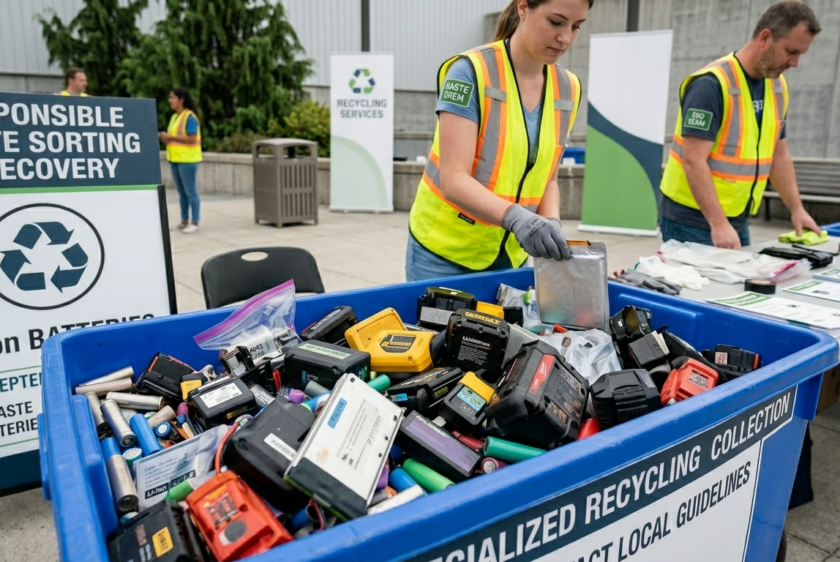
Lithium-ion batteries are part of everyday life now. They power our phones, laptops, tablets, cordless tools, e-bikes, scooters, cameras, vape devices, portable chargers, wireless headphones, toys, and even some lawn equipment. Most people use them daily without thinking much about what happens when the battery stops working.
The problem is that lithium-ion batteries should not be treated like regular trash. When they are thrown into a trash cart, roll-off dumpster, recycling bin, garbage truck, or waste facility, they can create serious safety risks. These batteries can catch fire if they are crushed, punctured, damaged, overheated, or exposed to the wrong conditions. In the waste industry, that makes them one of the most important household items to handle correctly.
For Colorado homeowners, renters, contractors, and businesses, proper lithium-ion battery disposal is not just about being environmentally responsible. It is about protecting people, equipment, property, and local waste facilities from preventable fires.
Most trash and recycling systems are built to handle everyday waste materials, not reactive batteries. Once a lithium-ion battery enters the waste stream, it may be tossed, compacted, crushed, or buried under heavy debris. That is where the risk begins.
A battery that looks harmless on your counter can become dangerous when it is damaged. If the battery casing is punctured or crushed, the internal components can short circuit. In some cases, this can lead to overheating, smoke, sparks, or fire. These fires can be difficult to control because lithium-ion batteries can burn hot and may reignite after the initial fire appears to be out.
This is especially concerning for waste collection and disposal operations. A battery can ignite inside a garbage truck, a transfer station, a recycling facility, or a landfill. These fires put drivers, equipment operators, facility workers, first responders, and nearby property at risk. They can also damage expensive equipment and interrupt local waste service.
That is why lithium-ion batteries should never be tossed loosely into household trash, curbside recycling, construction dumpsters, or commercial waste containers.
One of the biggest issues with lithium-ion battery disposal is that many people do not realize which items contain them. A dead phone battery, old power tool battery, broken vape pen, or damaged portable charger may not seem like a big deal. But once that item is mixed into regular trash, it can become a hidden fire hazard.
Think about what happens after trash leaves your home or job site. Bags are lifted, dropped, compacted, and transported. Dumpsters may contain heavy debris, sharp materials, or construction waste. Recycling facilities use conveyors, sorters, compactors, and other equipment. Any of those steps can damage a battery.
When a lithium-ion battery catches fire, it does not always happen immediately. It may happen during collection, transport, sorting, or disposal. That makes prevention the best solution. Keeping batteries out of the regular waste stream is far easier than responding to a fire after the fact.
Lithium-ion batteries are often found in rechargeable electronics and portable devices. Before throwing away an item, it is worth asking whether it has a rechargeable battery inside.
Some batteries are removable. Others are built into the device. Either way, these items should be handled with care when they reach the end of their useful life.
In general, lithium-ion batteries should not be thrown in the trash. They also should not be placed in standard curbside recycling bins. Even though batteries may contain recyclable materials, they need to go through the right collection and handling process.
Regular curbside recycling is not designed for loose batteries. Placing lithium-ion batteries in a recycling bin can create the same fire risk as placing them in the trash. The battery may be crushed during collection or sorting, which can create a dangerous situation for recycling facility workers and equipment.
The safest option is to take lithium-ion batteries to an approved battery recycling location, electronics recycling program, or household hazardous waste facility. These programs are designed to collect batteries separately and reduce the risk of fire during handling and transport.
Before taking lithium-ion batteries to a recycling or household hazardous waste drop-off location, they should be prepared safely. A little preparation can make a big difference.
If the battery is removable, place tape over the terminals before storing or transporting it. Electrical tape is a good option, but any non-conductive tape can help reduce the risk of contact between terminals and metal objects.
Another safe option is to place each battery in its own clear plastic bag. This helps prevent batteries from touching each other or coming into contact with loose metal items.
Until you can take batteries to an approved drop-off location, keep them in a cool, dry area away from heat, direct sunlight, water, and flammable materials.
Never attempt to open, crush, dismantle, or modify a lithium-ion battery. Damaging the battery can increase the risk of fire, smoke, or chemical exposure.
If a battery is swollen, leaking, smoking, unusually hot, or visibly damaged, do not place it with other batteries. Damaged batteries may require special handling. Contact your local household hazardous waste program or recycling provider for guidance before transporting it.
Colorado residents have several options for proper lithium-ion battery disposal. Availability may vary by city, county, and material type, so it is always a good idea to confirm accepted items before visiting a drop-off site.
Common disposal and recycling options may include:
For residents in the Colorado Springs area, El Paso County offers household hazardous waste guidance for items that should not go into regular trash, including batteries and other materials that require special handling. Residents can also use battery recycling locator tools, such as Call2Recycle, to find nearby drop-off options.
Before heading to a disposal site, check the rules for that specific location. Some programs accept small household batteries but may have different requirements for large batteries from e-bikes, scooters, power tools, or commercial equipment.
Many devices contain built-in lithium-ion batteries that cannot be easily removed. These items should usually be handled through electronics recycling rather than regular trash.
Examples include phones, tablets, laptops, wireless earbuds, smart watches, electric toothbrushes, and some rechargeable toys. If the battery cannot be removed safely, do not force it out. Take the entire device to an electronics recycling program or approved drop-off location.
This is especially important for damaged electronics. A cracked tablet, swollen laptop battery, or broken vape device may be more unstable than it looks. Keeping these items out of dumpsters and trash carts helps protect waste workers and facilities.
Businesses and contractors should be especially careful with lithium-ion battery disposal because they may generate larger quantities of battery-powered devices and equipment. Construction crews, maintenance teams, warehouses, property managers, landscapers, and technology businesses often use rechargeable tools and electronics every day.
A safe battery disposal policy can help reduce risk on job sites and in commercial facilities. Businesses should consider setting up a designated battery collection container, training employees not to place batteries in trash or roll-off dumpsters, and scheduling regular drop-offs with an approved recycling or hazardous waste provider.
Contractors should also pay attention during cleanouts, remodels, and demolition projects. Old electronics, rechargeable tools, security devices, toys, and small appliances may contain lithium-ion batteries. These items should be separated before debris goes into a dumpster.
No. Lithium-ion batteries should not be placed in a roll-off dumpster. Dumpsters are often used for bulky debris, construction materials, household cleanouts, roofing waste, and commercial junk removal. These materials can shift, crush, and damage batteries during loading and transport.
Even a small battery can create a big problem if it ignites inside a dumpster or truck. That is why batteries, electronics with built-in batteries, and other hazardous materials should be separated before a dumpster is loaded.
If you are renting a dumpster for a cleanout, remodel, construction project, or commercial job, take a few minutes to sort battery-powered items before they go into the container. This simple step helps keep the project safer and helps protect the waste handling process from preventable fire hazards.
Proper lithium-ion battery disposal protects more than the environment. It protects people and infrastructure throughout the entire waste process.
When batteries are handled correctly, communities can reduce the risk of fires in trash carts, dumpsters, collection trucks, transfer stations, recycling facilities, and landfills. Proper disposal also helps recover valuable materials and keeps harmful components out of places they do not belong.
For homeowners, it is a small habit change. For businesses, it is a basic safety practice. For the waste industry, it is a major part of keeping operations safe and reliable.
Apex Waste Solutions is a locally operated waste company serving communities across Southern Colorado. Whether customers are renting a roll-off dumpster, scheduling portable restroom service, or looking for responsible waste handling guidance, Apex understands how important safety is at every step.
Proper disposal starts before waste ever reaches a truck or facility. By helping customers understand what should and should not go into the trash, recycling, or dumpster, Apex can help reduce safety risks and support cleaner, more responsible waste practices across the communities it serves.
Lithium-ion batteries are a perfect example. They may be small, but they require special attention. Keeping them out of regular trash and dumpsters helps protect customers, drivers, workers, equipment, and local facilities.
No. Lithium-ion batteries should not go in regular household trash because they can create a fire risk if they are crushed, punctured, or damaged during collection and disposal.
No. Lithium-ion batteries should not be placed in standard curbside recycling bins. They need to be taken to a proper battery recycling location, electronics recycling program, or household hazardous waste facility.
A swollen, leaking, smoking, hot, or damaged battery should be handled carefully and kept away from other batteries, heat, and flammable materials. Contact your local household hazardous waste program or recycling provider for specific instructions before transporting it.
Yes, it is a good practice to tape the battery terminals or place each battery in a separate plastic bag before drop-off. This helps reduce the risk of sparks or short circuits.
No. Electronics with built-in lithium-ion batteries should not be placed in a dumpster. They should be separated and taken to an approved electronics recycling or battery recycling program.
Common items include phones, laptops, tablets, power tools, e-bikes, scooters, vape devices, portable chargers, Bluetooth speakers, headphones, smart watches, cameras, and rechargeable toys.
Colorado residents can often use household hazardous waste facilities, electronics recycling programs, battery recycling drop-off locations, and participating retail programs. Check with your city, county, or a battery recycling locator before visiting to confirm accepted items.
Lithium-ion batteries are useful, powerful, and common, but they do not belong in regular trash, curbside recycling, or roll-off dumpsters. Taking a few extra minutes to separate, tape, bag, and recycle batteries properly can help prevent fires, protect workers, and keep waste facilities safer.
If you are planning a cleanout, construction project, remodel, or commercial waste project in Southern Colorado, Apex Waste Solutions can help you understand what can and cannot go into your dumpster. Contact Apex Waste Solutions today with questions about roll-off dumpster rentals, safe waste handling, or responsible disposal practices for your next project.